
How Mexico News Daily Took Back Control of Its Subscriber Data in Under 60 Days
Mexico News Daily spent years on a proprietary subscription platform that controlled its own funnel: every pricing test needed a vendor's sign-off, and every export of subscriber data ran into a wall. Moving to an open-source stack with Stripe billing and a registration wall took less than 60 days, migration included. The result: a 9% free-to-paid conversion rate, which lands at the strong end of the typical 5-10% range publishers see with real nurturing. More importantly, Mexico News Daily now owns its pricing, its data, and its ability to test both without waiting on someone else's product roadmap. In a market where organic search traffic is shrinking, that kind of control isn't optional anymore.

Case Study Summary
- Publisher: Mexico News Daily
- Challenge: Locked into a proprietary subscription platform with no way to export subscriber data or adjust pricing without going through the vendor
- Solution: Migrated to an open-source subscription stack with Stripe billing and a registration wall
- Result: Live in under 60 days, converting 9% of free registrations to paid subscribers, with full ownership of subscriber data and pricing
The Setup
Mexico News Daily ran its subscriptions on a proprietary platform for years. The system worked, in the sense that it processed payments and let readers sign up.
It comes down to one question every publisher on a closed platform eventually has to answer: are you building on your own platform, or renting someone else’s? A rented system hands you a working product on day one. It also decides what you get to see and change later, not you.
That is exactly what Mexico News Daily ran into. Every pricing test needed the vendor’s approval. Every export of subscriber data ran into a wall. The platform, not Mexico News Daily, controlled the funnel.
The Migration
Mexico News Daily’s team worked with Leaky Paywall to rebuild the subscription stack on open architecture. Stripe handled billing. A registration wall replaced the old sign-up flow.
The whole move took less than 60 days from start to finish. That includes migrating existing subscribers, not just standing up new software.
Speed mattered, but it wasn’t the point. The point was what Mexico News Daily could do after the migration that it couldn’t do before.
What Happened
The registration wall converted 9% of free registrations into paying subscribers. That lands at the strong end of the typical 5% to 10% range publishers see when they nurture free registrants toward a paid plan, and it sits close to the 9.88% conversion rate Piano has measured for registered readers overall, compared to well under 1% for a cold paywall with no registration step first.
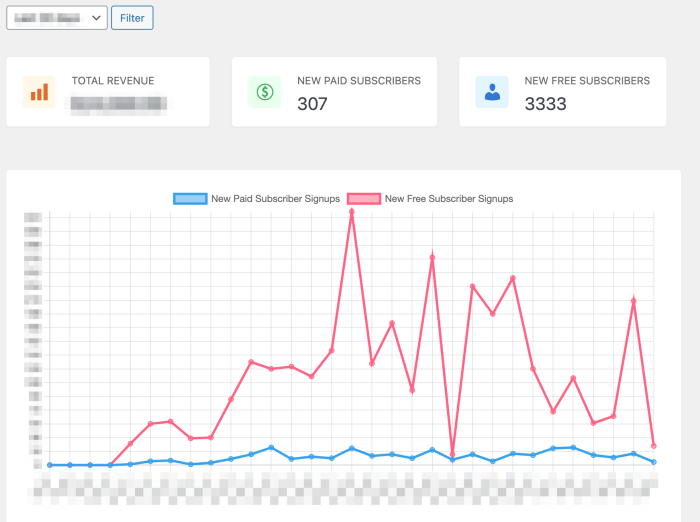
Pricing changes that used to require a support ticket now happen inside Stripe’s dashboard. Mexico News Daily can test a price, watch what happens, and adjust it the same week instead of waiting on a vendor’s release schedule.
Subscriber data lives in a system Mexico News Daily controls outright. No export limits. No third party deciding what Mexico News Daily gets to see about its own readers.
Why This Matters More Than It Used To
A closed platform used to be a minor annoyance. It is a bigger risk now.
Organic search traffic to publisher sites is down 30% to 38%, and AI-generated answer summaries are cutting click-through by another 58%, according to data compiled in the Publisher AI Survival Guide. Readers increasingly get their information without ever landing on a publisher’s site.
That makes the audience you already have, and the first-party data that describes them, worth more than it was five years ago. A platform that limits what you can see about your own readers, or what you can do with that information, is a liability you cannot afford to carry quietly.
The Real Cost of a Rigid Platform
Run the math on what a locked platform actually costs over a year, not just in fees, but in speed.
On an open stack, you can test a registration wall headline, a pricing tier, or an upgrade message in days. On a closed one, that same change might take months, if it happens at all, because you’re waiting on a vendor’s product roadmap instead of your own team.
Mexico News Daily’s 9% conversion rate did not happen by accident. It happened because the team could iterate on the registration flow without asking permission first. If you’re stuck on a rigid platform, you are not just missing that specific number. You are missing every test that number came from.
Signs You’re in the Same Situation
A few questions tend to surface the problem before it costs you a full year of missed experiments.
Can you export your full subscriber list, including engagement history, without opening a support ticket? Can you change a price or test a new tier this week, or does that require a vendor’s sign-off? Do you know which of your paid subscribers have gone quiet in the last 30 days, or does that data sit somewhere you cannot easily query?
If the honest answer to any of those is no, the platform is making decisions that should belong to you.
A Framework for Evaluating Your Stack
Three questions cut through most of the noise when you are deciding whether to stay or switch.
Does it give you full data export, on demand? Not a quarterly report the vendor generates. A real export you can pull whenever you need it.
Can you change pricing and messaging without a ticket? Speed of iteration is the actual advantage here, not the platform itself.
Does it work with tools you already trust for billing and retention? Stripe integration, for example, opens up dunning and churn-recovery tools that a closed system may not support at all.
A platform that fails more than one of these is worth a hard look, regardless of what it costs to switch.
What to Watch Next
Mexico News Daily’s next moves are ones any publisher on an open stack can make. Metering how many free articles a reader gets before hitting the wall. Testing upgrade messaging at different points in the reader’s history with the site.
Owning your billing relationship pays off on churn too. Publishers routed through a third-party SaaS middleman see involuntary churn run 6% to 10% a year. Billing directly through Stripe typically brings that down to 4% to 7%, and layering in a dunning tool like ChurnBuster recovers another 10% to 15% of subscribers who would have otherwise quietly lapsed.
Takeaways
- A closed subscription platform costs you more in missed experiments than it does in fees.
- Full data export and pricing control are not nice-to-haves anymore. They are what let you react to a shrinking organic search environment.
- Mexico News Daily’s 9% conversion rate sits at the strong end of the normal 5% to 10% free-to-paid range, and it came from being able to test the registration flow freely.
- Ask your current platform three questions: full data export, pricing control without a ticket, and compatibility with tools like Stripe. If it fails more than one, it is worth evaluating a switch.
Resources Mentioned
