
The Print Decision: Stop, Shrink, or Charge More
Print rarely fails on its own. Whether you stop, shrink, or charge more, four questions decide the call, and a strong digital list is the real safety net.

Episode Summary
- Pete Ericson and co-host Tyler spent a decade onboarding print publishers before either of them worked in digital subscriptions. On the Paywall Podcast, they break down what separates the print operations that survive from the ones that don’t.
- An estimated one to two local newspapers close every week in the US, and print is usually the anchor dragging them down. But national circulation dollars have held far steadier than ad dollars, which keep falling, according to Pew Research data.
- Six real publisher decisions get the full breakdown: stopping print cold, shrinking and repricing it, reversing a free model to charge for both print and digital, launching print from zero, turning a PDF archive into a traffic engine, and starting a print product for one specific reason that has nothing to do with readers.
- None of these were guesses. Four questions decide it: content type, ad revenue, reader attachment, and how much trust print buys you in an AI-saturated market.
Why This Decision Keeps Coming Up
Local news outlets in the US close at an estimated rate of one to two a week. Weekly publishers get hit the hardest.
One recent closure involved a legacy print operation with a real digital subscription base, not huge, but big enough to run a lean digital-only shop. What ended it wasn’t the print product itself. It was debt taken on through an acquisition, coming due all at once.
That’s a special case. But it points at the bigger pattern: print rarely causes a closure on its own. It’s an anchor that makes every other problem heavier.
The Four Questions That Actually Decide It
Many publishers treat “should we stop printing” like a mood, not a decision. It shouldn’t be. Four questions do most of the work.
What kind of content are you publishing? News is transactional. Readers want the facts and they want them fast, often on a phone. A design-driven magazine is the opposite: readers settle into a chair and page through it slowly. That’s a lean-back experience, and for a magazine built around design, the print object really can be the product, not just a delivery method for it.
Does ad revenue carry your print product? If your print ad revenue funds the operation on its own, this stops being a hard call. Keep going. The tougher spot is a print product that suits your readers’ lifestyle and has ad support, but isn’t a clear profit center either way.
How attached are your readers to the format? Older readers tend to be genuinely loyal to print. There’s also a smaller, real trend of younger readers treating print as a lifestyle choice: something tactile and a little bit cool, separate from a phone screen.
Does print buy you trust in an AI-saturated market? A printed newspaper or magazine is something AI systems can’t scrape and republish. That protection has real value, though the trust ultimately comes from the reporting and the relationship with readers, not the paper stock.
The Data Publishers Don’t Expect
US advertising and circulation revenue for publishers peaked around 2006, then fell off a cliff starting in 2009, the year the US economy collapsed. It’s been sliding ever since as digital took over. That part isn’t surprising.
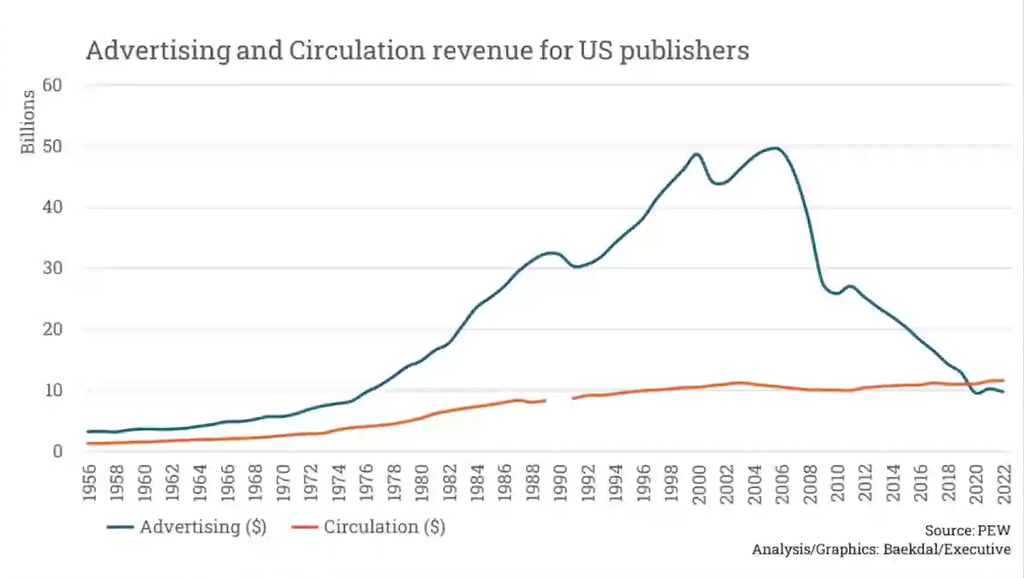
What is surprising: circulation dollars have held far steadier than ad dollars, which keep sliding, according to Pew Research data compiled by industry analyst Thomas Baekdal. Readers are still paying directly for content, even as advertisers pay less to reach them.
The New York Times is the clearest example of where that trend leads. It embraced digital subscriptions early, turning on a metered paywall back in the early 2010s. Today, print makes up only about 4% of its total circulation. That 4% is intensely loyal and pays well for the privilege, which is part of the secret to keeping a shrinking print product alive. But there’s no evidence print is winning new subscribers anywhere. It’s serving people who already loved the paper before they went digital.
Zoom out further and the pattern holds internationally. Sweden’s news subscriptions are almost entirely digital at this point. Norway isn’t far behind. The UK moved toward digital subscriptions early too. None of them are rushing back to print.
Three Ways Publishers Cut Loose From Print
Stop cold. Brew Your Own and Winemaker, sister how-to magazines for home brewers and winemakers, went cold turkey on print. They lost some readers in the process and communicated the change honestly along the way. The subscriber base rebuilt within a year.
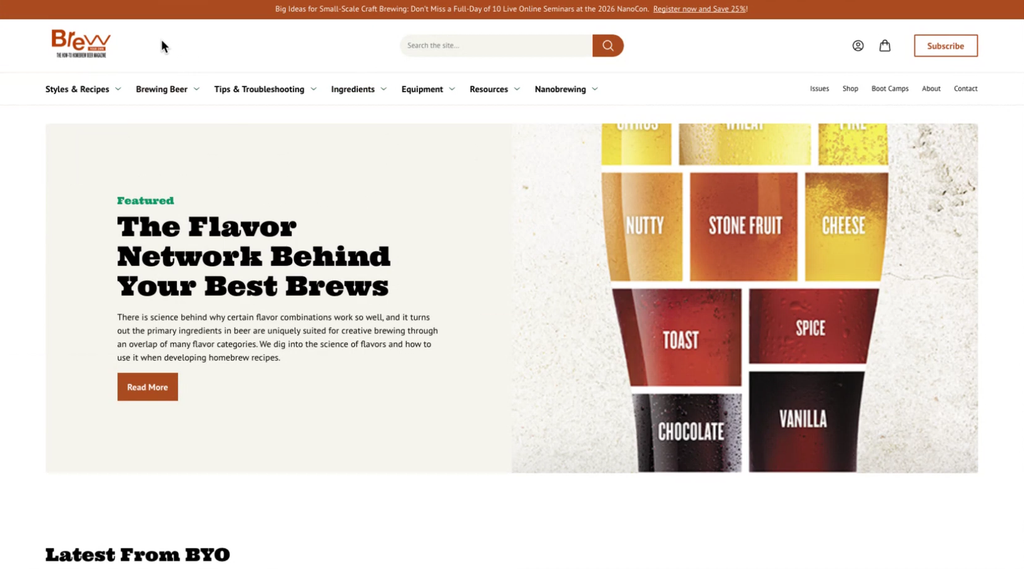
The distinction that made it work: this is how-to content, not design-driven lifestyle content. Readers want the recipe and the technique, not the paper it’s printed on. That’s an easier switch than a glossy design magazine will ever be.
Shrink and reprice. Track and Field News is straight news coverage, not a design product, but its readers skewed older. When the magazine dropped print mid-transition, half its subscriber base simply didn’t renew. Not because they disliked the coverage. They didn’t want to log into anything online.
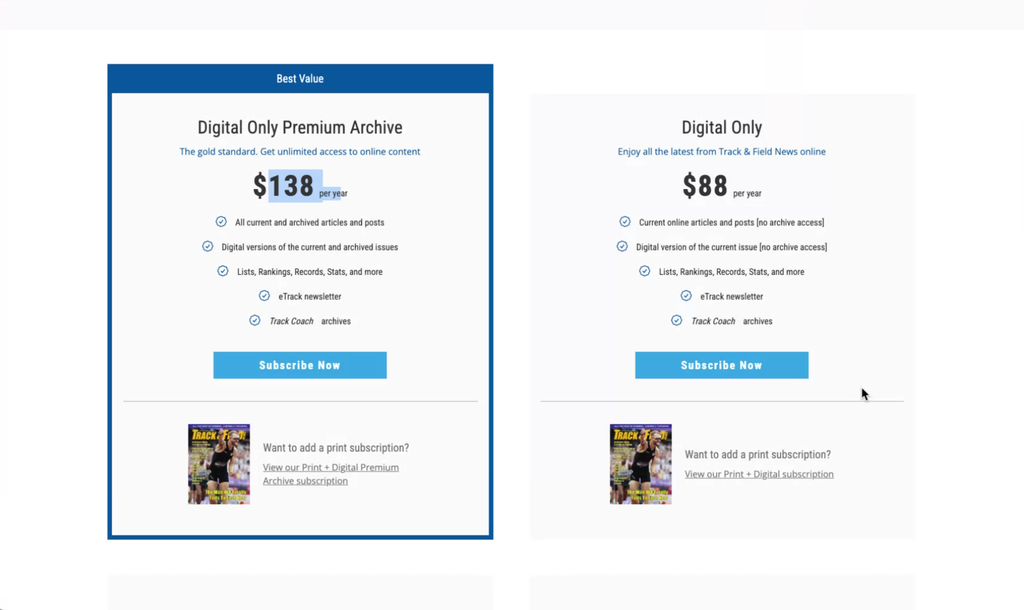
Nine months later, the magazine brought print back, but restructured it entirely: print-on-demand instead of warehoused inventory, and pricing that moved from roughly $29 a year to well over $100. That’s close to a five-fold increase. Digital subscriptions now run alongside it, and both streams are healthy. The lesson: if your readers genuinely need the format, keep it, but treat it as its own profit center instead of a loss leader carried by ads.
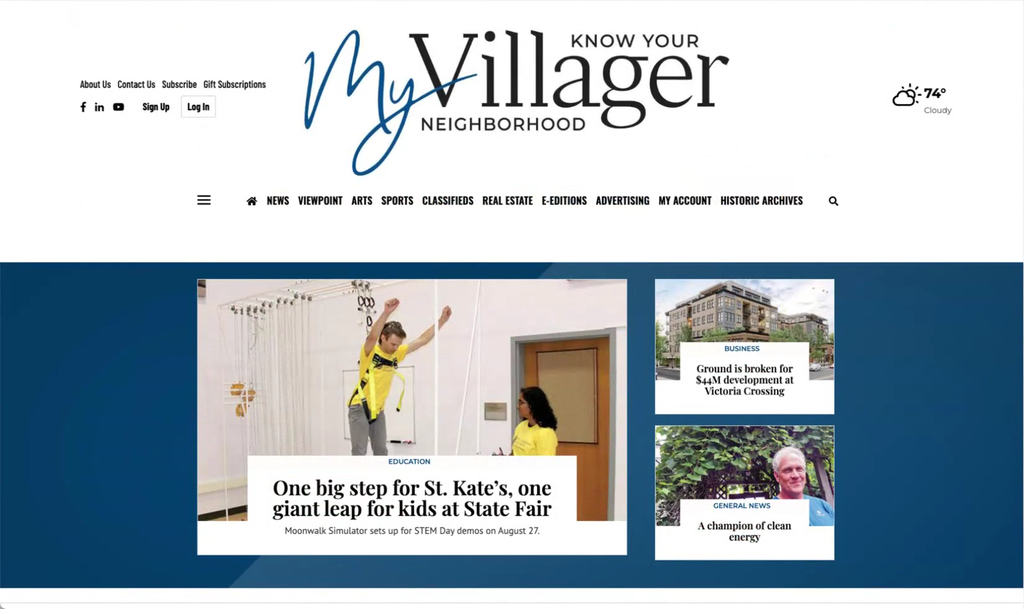
Reverse the model entirely. My Villager, a weekly paper in Saint Paul, distributed roughly 30,000 free print copies a week through retail stores, funded entirely by ads. As ad revenue softened, the paper made one of the bigger reversals in this space: it started charging for both print and digital access, twice a month for print now instead of weekly, paired with a full digital subscription. Readers paid. The paper is still publishing on both.
When Starting (or Restarting) Print Actually Works
Stopping isn’t the only story. Some publishers are adding print with no legacy print history to unwind.
Catch Magazine, a fly-fishing title, launched a print edition and is doing okay with it so far. It’s a design-forward, enthusiast niche with real ad dollars behind it, exactly the profile where print tends to work.
Small Boats Monthly took a different route. Always digital, the team looked at its own analytics, pulled its most popular articles of the year, and turned them into a printed coffee-table book. It sold well. Their audience, wooden boat enthusiasts, skews toward readers with the time and money for a well-made physical object, and a book is a much smaller production lift than a recurring magazine.
There’s also a narrower, purely financial reason some newsrooms start printing: public notice income. States require notices like probate filings and court orders to run in a “qualified” local newspaper, and most states require that newspaper to have printed continuously for the prior 12 months. A handful of newsrooms in news deserts have launched print specifically to qualify for that revenue stream, even when their day-to-day publishing is entirely digital. It’s a real business case, but it’s a narrow one: a full year of print investment before the income even becomes available, and state rules vary enough that qualifying can be its own project.
Turn Your Archive Into a Traffic Engine Instead of a PDF Graveyard
If you do have decades of print archives, don’t let them sit as scanned PDFs. Modern Drummer magazine started publishing its issues as real HTML articles on the web, one new issue a month going forward and one archive issue a month going backward. Traffic doubled within a year, without the team even trying to make that happen. Evergreen how-to and reference content, which many magazine archives are full of, keeps pulling in search and social traffic for years after it first runs.
If you have PDF archives sitting untouched, our publishers use reissue.app to convert them. Upload a scanned issue and it pulls the text, images, and formatting into ready-to-edit WordPress draft posts, no manual retyping required.
Flipbook viewers are the opposite instinct, and they have a place, but a limited one. They’re a nice perk for readers who want to see what a print issue looks like, and some older or format-loyal readers genuinely prefer them. They’re also difficult to read on a phone and invisible to search engines and AI tools, since the text lives inside an image, not on the page. Treat a flipbook as a bonus for existing subscribers, not a substitute for getting the actual content onto the web as text.
“Is the paper the product, or is it just the delivery vehicle for the product?” Pete Ericson, Paywall Podcast
The One Move That Makes Any of This Work: Build the List First
Every publisher in this piece who successfully cut print, shrank it, or replaced it leaned on the same fallback: a digital audience worth keeping.
That starts with how you capture email addresses in the first place. A newsletter opt-in box in a sidebar converts under 1% of visible traffic, typically in the 0.9% to 1.45% range. A registration wall, which requires an email address after a set number of free articles instead of just asking for one, converts 3.2% to 6.7% of that same traffic, roughly two to seven times more, based on data compiled across hundreds of publishers.
The difference is the word “requires.” A sidebar widget asks. A registration wall requires an email address to keep reading, while the content stays free. That’s not a subtle distinction. It’s the difference between a list that grows by accident and one that grows on purpose.
Once readers register, they’re logged in, which means you can see which of them are actually engaged: opening content regularly versus going quiet. That’s the same audience you’d need to lean on if you ever have to make a hard call on print. The newsletter becomes the actual product, the thing that lands in an inbox every week, not a courtesy add-on to the print subscription.
Key Takeaways
- Print rarely fails on its own. It’s an anchor that makes every other business problem heavier, especially debt.
- Four questions decide the call: content type, whether ad revenue carries the print product, reader attachment to the format, and how much trust print buys you against AI scraping.
- Circulation revenue has held far steadier than ad revenue industry-wide, even as ad dollars keep sliding. Readers are still paying directly for content.
- Whatever you decide on print, the real safety net is a large, engaged digital list. Registration walls build that list two to seven times faster than a newsletter opt-in box.
Try This Week
Pull your print subscriber list and check how many of those readers have ever logged into a digital account on your site. If it’s a small fraction, that’s your real answer on whether digital could carry the weight if you ever had to make this call.
Watch the Teardown
Resources Mentioned
