
7 Revenue Killers That Sank a 240-Year-Old Newspaper
"They treated their visitors like enemies." A 240-year-old newspaper demanded payment before value, gated newsletter signups behind logins, and left $14 million on the table.

Episode Summary
- Pittsburgh Post Gazette had access to a 2.4 million resident market but failed to capture even 5% as subscribers—missing out on $14-28 million in potential annual revenue
- The site ran three separate subscription platforms simultaneously, creating operational chaos and subscriber confusion
- Newsletter signup required login credentials, gating the top of the funnel instead of building an email list
- An immediate 99-cent paywall appeared before readers could evaluate content value—destroying conversion and cheapening the brand
- 240 years of archive content was licensed to newspapers.com instead of being used as a subscriber benefit
The Breakdown
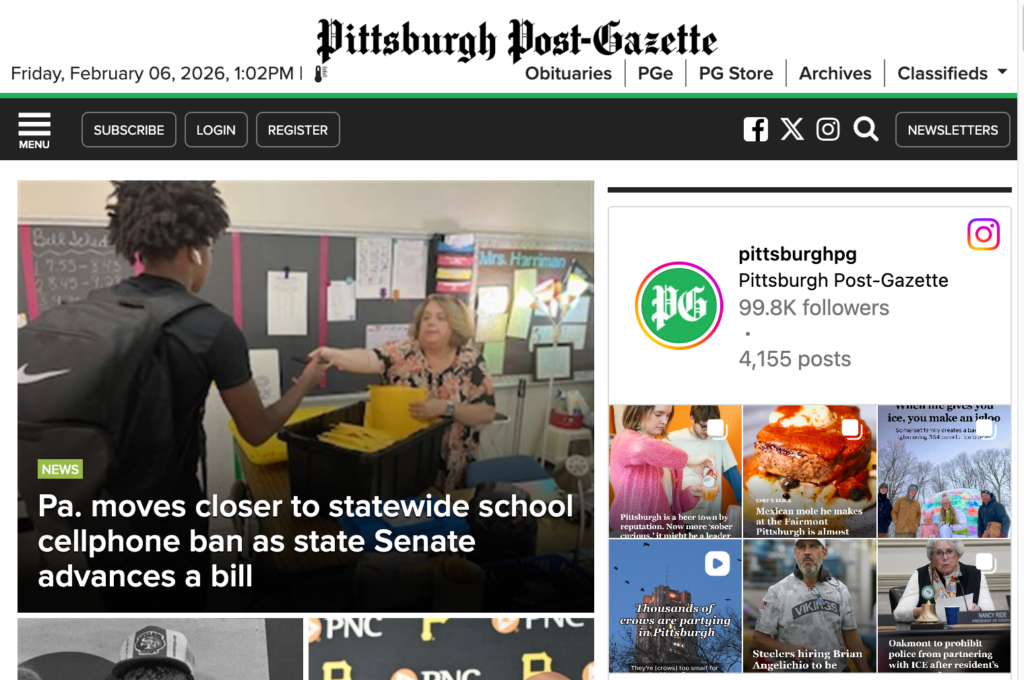
The Pittsburgh Post Gazette announced in early 2026 that they would cease operations in May after 240 years of publishing. When Pete and Tyler conducted a teardown of their website, they discovered a digital operation that systematically destroyed reader relationships at every touchpoint.
With 2.4 million residents in their trading area, market data suggests they should have been converting at least 5% to paid subscribers. At $10 per month, that’s $14 million in annual recurring revenue at baseline performance. Publishers in comparable markets reach 10% conversion—$28 million per year. The Post Gazette captured almost none of it.
The problems started immediately. Visitors with ad blockers—roughly 40% of all readers—were blocked by a warning screen before seeing any content. This created friction for users who would never generate ad revenue anyway. Once past that barrier, the site appeared professional and well-organized on the surface. But every subsequent interaction revealed deeper operational failures.
The 99-Cent Paywall Problem
Click any article and an immediate paywall appeared: “8 weeks for 99 cents.” No content preview. No value demonstration. No relationship building. Just an instant demand for payment before readers could evaluate whether the content was worth their time.
This creates three separate problems. First, the transaction economics don’t work. Stripe takes 50 cents plus 3% per transaction. On a 99-cent charge, roughly 70% goes to processing fees. The publisher nets about 30 cents—then faces the difficult task of converting that trial user to a full-price subscription without giving them much content access.
Second, it cheapens the brand. Publishers give away time, not money. A proper introductory offer charges full price but extends the duration—$10 for three months instead of $10 for one. This preserves content value while still providing an incentive.
Third, it blocks the most important conversion opportunity: email registration. Instead of demanding immediate payment, a registration wall would collect email addresses in exchange for article access. This builds the newsletter list that drives long-term engagement and conversion. Based on industry data, the Post Gazette should have been building a list of 300,000-400,000 local email addresses. That list becomes valuable for both subscription conversion and advertising sponsors who want access to a verified local audience.
The Post Gazette took the opposite approach. Their newsletter signup page required login credentials. They gated the top of the funnel—the exact point where publishers should be reducing friction to capture leads.
Three Subscription Systems, Zero Integration
The operational confusion went deeper. The Post Gazette ran three separate subscription platforms simultaneously.
The main digital subscription used one checkout system. The print-plus-digital combo subscription redirected to FormStack—a completely different platform with a different URL, different branding, and different login credentials. When a visitor clicked to subscribe, they suddenly found themselves on an unfamiliar third-party form that looked nothing like the Post Gazette website. This is a conversion killer. Users pulling out credit cards need confidence they’re on the legitimate site, not a phishing page.
Then there was the archive problem. Two hundred and forty years of content represents massive value, especially for local readers with family history in Pittsburgh. But when visitors clicked “Archives,” they landed on newspapers.com—a third platform that required yet another subscription and login. The Post Gazette was essentially licensing their historical competitive advantage to an outside vendor for pennies on the dollar instead of using it as a premium subscriber benefit.
This fragmentation creates subscriber confusion (“Which subscription do I have? Where do I log in?”) and operational nightmares (“How do we sync user data across three systems? What happens when someone subscribes to print—do they get digital access?”). Publishers working with integrated systems have solved this for over a decade. One subscription, one login, one experience. The Post Gazette was running three disconnected operations pretending to be a single product.
The Ad-First Mentality
Despite pushing immediate paid subscriptions, the site was flooded with display ads. Some appeared relevant to Pittsburgh, but many were generic programmatic ads that destroyed the user experience. The ad network even overlaid the subscription cards in one instance, proving the systems weren’t communicating.
For publishers with millions of monthly page views, Google display ads generate far less revenue than they once did. The eyeball economy is mostly dead. But the Post Gazette’s entire digital operation suggested they were still optimizing for ad impressions rather than subscriber relationships. You can’t serve two masters here. Either you’re building a subscriber business or you’re running an ad-supported traffic site. Trying to do both with this level of aggression just alienates everyone.
The Missing Pieces
The Post Gazette had an event calendar buried somewhere on their site. Local event calendars represent strong SEO opportunities and community engagement hooks, but it was nearly impossible to find. This is low-hanging fruit for any local publisher—an AI-powered event calendar that aggregates local happenings, drives search traffic, and gives readers reasons to return regularly.
The print operations added another anchor. They’d already cut from daily publication to twice weekly by 2018, but maintaining any print infrastructure carries massive overhead. Publishers who have made the full transition to digital—dropping print entirely—often see their economics improve dramatically. The printing presses, the distribution network, the physical plant in downtown Pittsburgh: all of that bleeds money that could fund digital transformation.
What Should Have Happened
Start with a registration wall. Don’t ask for money—ask for an email address. Give readers access to several articles per month in exchange for registration. This builds the email list that becomes your direct marketing channel. Twenty percent of visitors convert to registered users with a properly implemented registration wall. Newsletter signup widgets convert at 3% if you’re lucky.
Once readers are registered and receiving your newsletter, they see your content regularly. The newsletter drives them back to the site where they encounter upgrade messaging. Some percentage converts to paid subscribers. Others remain free registered users who provide value through email list scale (attractive to sponsors) and social sharing (gift links that registered users can forward to friends).
Stop with the 99-cent promotional pricing. Charge full price and give away time instead. Three months for the price of one preserves brand value and gives readers enough experience to make an informed decision about continuing.
Consolidate everything into one subscription system. Whether someone wants digital-only or print-plus-digital, they should have one account, one login, and seamless access to everything they’ve paid for. Modern circulation management systems integrate with digital platforms. This isn’t a technical limitation—it’s an operational choice.
Own your archives. That 240 years of content should be a premium subscriber benefit, fully searchable and integrated into the main site. With AI tools, historical PDFs can be converted into readable, searchable articles. This is differentiated content that competitors can’t replicate.
Focus on direct ad sales to local businesses instead of relying on programmatic networks. A verified, engaged local audience of registered users is valuable to Pittsburgh-area businesses. That’s where the advertising revenue opportunity lives—not in generic display ads from national networks.
The One Thing to Check Right Now
If you’re running a publisher site, open an incognito browser and visit your homepage. Count how many popups or interruptions you encounter before you can actually read an article. If it’s more than zero, you have work to do. Every friction point you add before content access reduces conversion. The Post Gazette had multiple barriers stacked on top of each other—ad blocker warnings, immediate paywalls, newsletter signups behind login walls. Each one drove more readers away.
Key Takeaways
- Registration walls outperform immediate paywalls — Build your email list first, convert to paid subscribers second. Twenty percent of visitors will register for free access. Far fewer will pay immediately without experiencing content value.
- Promotional pricing should give away time, not money — A $10/month subscription offered as “three months for the price of one” preserves brand value. Charging 99 cents destroys it and eliminates profit after transaction fees.
- Fragmented subscription systems kill conversion — Multiple checkout platforms, multiple logins, and disconnected user experiences create confusion and abandoned carts. One subscription, one account, one experience.
- Your email list is your competitive moat — With AI scraping content and Google sending less traffic, your direct relationship with readers through email becomes your most valuable asset. Don’t gate newsletter signups behind login requirements.
- Archives are subscriber benefits, not licensing opportunities — Historical content represents differentiated value that can’t be replicated. Use it to justify premium subscriptions instead of outsourcing it to third-party platforms.
Notable Quote
“If you do the math right, 2.4 million population should result in about 15 to 20% newsletter conversion, which would be 300 to 400,000 email addresses that you should have. Do sponsors want to get in front of three or 400,000 local people interested in Pittsburgh? Yeah, I think so.”
Try This Week
Open an incognito browser and visit your own website. Count every popup, interruption, or barrier that appears before you can read your first article. If it’s more than zero, remove them. Start with the email capture—make that a simple registration wall, not a popup. Every additional friction point costs you conversions.
Watch the Episode
Listen to this Episode
Resources Mentioned
- Leaky Paywall — WordPress subscription platform with registration wall capabilities
- Statista — Market research database with publisher subscriber data
- Local Calendar AI — AI-powered event calendar solution for local publishers
