
The Newsletter Setup That Grows Email Lists 20% Faster
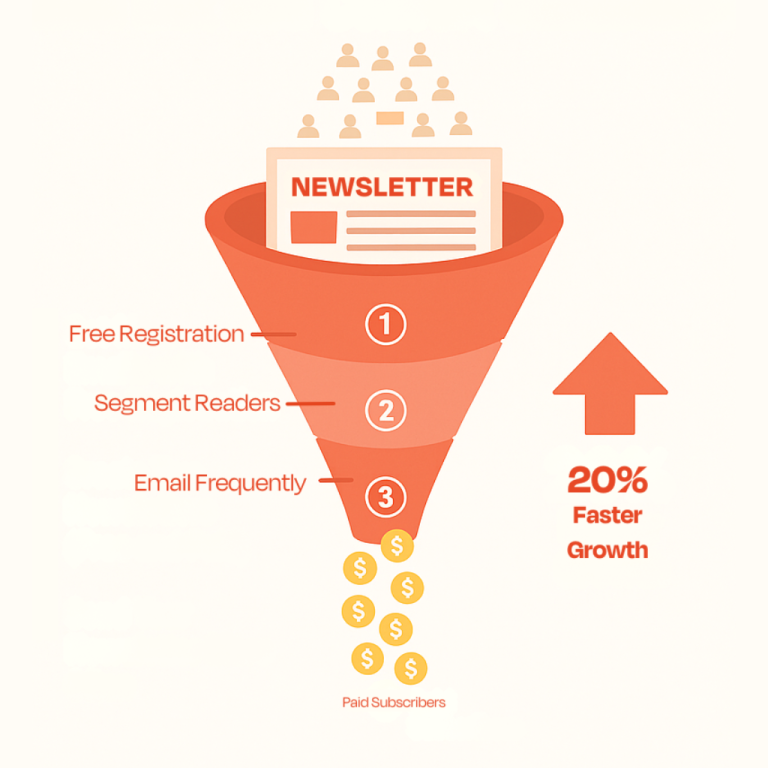
Three steps to turn your newsletter into a paid subscription engine: free registration, separate free and paid newsletters with distinct purposes, and fearless send frequency.

Episode Summary
- Free registration grows email lists on average 20% faster than newsletter popups or slide-ins
- Your free newsletter and paid newsletter have completely different jobs: one sells, the other delivers
- A publisher sending newsletters more frequently outperformed a comparable publisher by 4X in paid conversions
- Archived content actually gets higher engagement rates than fresh content when resurfaced in newsletters
The Playbook
Most publishers treat their newsletter as a single thing: one list, one send, one format. But if you are running paid subscriptions, your newsletter is actually two products with two very different purposes. Pete and Tyler walk through the three-step framework that ties free registration, segmented newsletters, and send frequency into a flywheel that builds your email list and converts more paid subscribers.
Step 1: Replace Your Newsletter Popup with Free Registration
The foundation of this framework is a free registration wall on your website, not a popup or slide-in asking people to join your newsletter.
The way it works: give every visitor one free article without any interruption. No popups, no slide-ins, nothing. Just let them read. On the second article, present a free registration prompt. The messaging is simple: “This story is free for you. Create a free account and get more stories delivered to your inbox.”
That prompt makes two promises. First, the next article will be free if they register. Second, they will get your newsletter. Free sells, so lean into it.
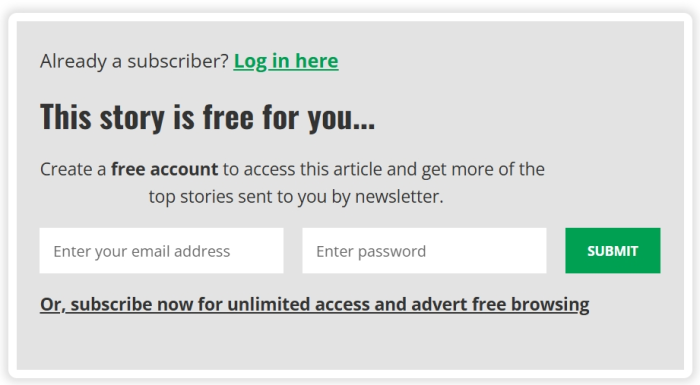
This converts significantly better than traditional newsletter signups. On average, publishers using free registration grow their email lists 20% faster. The reason is straightforward: a reader who registers with an email and password is more engaged than someone who casually enters their email into a sidebar widget. They have chosen to be there. They are logged in. And you are tracking which article actually converted them, which gives you useful data about what your audience values.
Once registered, that email automatically flows into your newsletter service (like Flowletter) and gets segmented into your free reader list. This distinction between free registered readers and paid subscribers is what makes the next step possible.
Step 2: Give Your Free and Paid Newsletters Different Jobs
Because of free registration, you now have two distinct audiences: free registered readers and paid subscribers. Each group needs its own newsletter with a clear purpose.
The free newsletter’s job is to convert. Its purpose is to drive free registered readers back to your website where they will see upgrade messaging. Every send is an opportunity to put your subscription offer in front of engaged readers who have not yet paid.
Structure it with an editor’s welcome at the top for a personal touch. Right below that, place a subscription promotion: a title, a line of text, and a button. Keep it simple and not too aggressive at the top. Then deliver your content as titles, excerpts, and images. At the bottom, after the content, place a longer subscription call-to-action with the full list of benefits and a prominent button. Readers who scroll to the bottom of your newsletter are highly engaged. They are exactly the audience most likely to convert, and they may just need to see that message 10 or 20 times before they act.
Brew Your Own magazine structures their free newsletter exactly this way: editor’s welcome, subscription banner near the top, content in the middle, and a full subscription pitch at the bottom.
The paid newsletter’s job is to deliver value. Remove all upgrade messaging since these readers have already paid. Instead, use it as an opportunity to add value to the subscription. Some options that work well:
Early delivery. Send paid subscribers an afternoon or early morning edition that free readers do not receive. Salem Reporter does this effectively, sending paid subscribers a separate newsletter that is similar to the free version but just different enough to feel like they are getting their money’s worth.
Full-text email. iPolitics in Canada sends a full-text newsletter to paid subscribers at 6 a.m. Their readers told them they want to open their email in the morning and just read, without clicking through or logging in. For a political news publisher, especially during election season, this is a major convenience benefit.
Both of these are easy to set up and fully automatable. They add a real chunk of value to your paid subscription without requiring you to produce additional content.
You can also use the bottom of your free newsletter for sponsorship placements. As your email list grows through free registration, sponsors will want in. Logos and a “sponsored by” section at the bottom of the newsletter is a clean way to add that revenue stream.
Step 3: Send More Frequently Than You Think You Should
The third piece of the framework is send frequency, and most publishers are not sending enough.
A case study comparing two similar regional news publishers found that the one sending newsletters more frequently outperformed the other by 4X in paid conversions. The difference was not content quality or pricing. It was how often they emailed their readers.
The fear most publishers have is that they will annoy their subscribers. But remember: these are people who opted in with an email and a password. They are interested in your content. And the reality of how people use email today is that we are all scanners. We scan subject lines, pick out what looks interesting, and ignore the rest. If a reader skips 80% of your newsletters, the 20% they do open are chances to drive them back to your site and in front of upgrade messaging.
For news publishers covering local, regional, or daily news, the minimum cadence should be one newsletter per day. Twice a day is even better if you can support it with content, and the second send can be a paid-only edition.
For long-form or magazine publishers, aim for at least twice a week. If you are thinking “I do not have enough content for that,” consider your archives. Small Boats Magazine takes two related archive articles and packages them into a separate newsletter. And here is a surprising data point from the episode: archived content actually gets higher engagement rates than fresh content. If you think about it, that makes sense. If a publisher is resurfacing an archive article, readers assume it must be important.
The Flywheel Effect
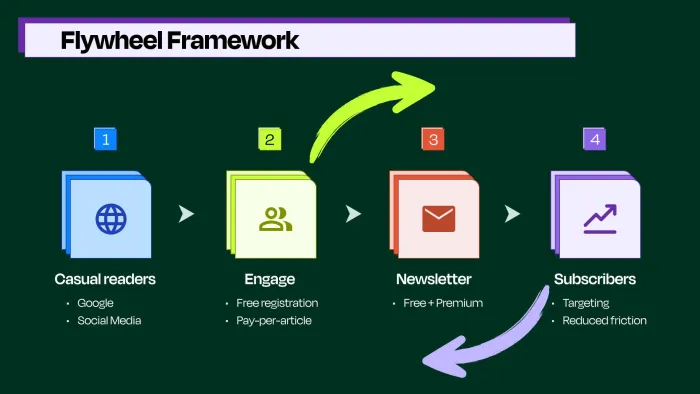
These three elements work together. Free registration builds your email list. Your segmented newsletters drive free readers back to your website to see upgrade messaging, while paid readers get a premium experience. Higher send frequency means more chances for readers to click, visit your site, and encounter your subscription offer.
The more newsletters you send, the more traffic your website gets. More traffic means more impressions on your upgrade messaging. More impressions mean higher conversion rates. And as your email list grows, sponsors become interested too. That is the flywheel.
Key Takeaways
- Your free newsletter is a sales tool. Its purpose is to drive readers back to your website to see upgrade messaging. Structure it with a subscription banner near the top, content in the middle, and a full benefits pitch at the bottom.
- Your paid newsletter is a value delivery tool. Remove all upgrade messaging and add exclusive benefits like early delivery, full-text articles, or a separate afternoon edition.
- Repurpose your archives for send frequency. Most readers never see your content the first time. Package archived articles into newsletters to maintain a high cadence without producing new content.
- Readers who scroll to the bottom of your newsletter are your best conversion candidates. Place your strongest subscription pitch there.
Notable quote
“Your newsletter really is your product. Yes, you have a website with all this content, but your newsletter is what shows up magically in somebody’s inbox. They don’t have to do anything. It comes to them.”
Pete
Try This Week
If you have a single newsletter going to all readers, segment it. Create a free version with upgrade messaging at the top and bottom, and a paid version without it. If you are already segmented, add one more send per week using archived content and watch what happens to your traffic and conversions.
Watch the Episode
Listen to the Paywall Podcast
Resources Mentioned
