
How to Successfully Kill Your Print Edition (And Live to Tell About It)
A 30-year-old home brewing magazine went 100% digital and survived. Here's the year-long plan that kept advertisers, retained readers, and turned email into the product.

Episode Summary
- Brew Your Own, a 30-year-old home brewing magazine, went 100% digital and shipped its last print issue in early 2025.
- The transition started with a year of planning, down to renewal email flows and QR codes on print postcards.
- Around 20% of readers still use the digital flipbook, which kept print advertisers in the fold with trackable, clickable ads.
- The old department-based navigation got torn down and rebuilt around topics readers actually search for.
- A Lead-In growth hack on high-traffic articles turns one-and-done organic visitors into free registrations.
The Breakdown
Killing print is the scariest operational decision a publisher can make. The fear of losing legacy subscribers and watching advertisers walk keeps a lot of publishers frozen, even when paper, ink, and fulfillment costs are eating the margin alive.
Pete sat down with Wally Wallace, partner at the digital agency 50 Fish, to walk through a publisher who made the jump and lived to tell about it. 50 Fish has been around since 2007, and for the last decade Wally’s team has focused on helping subscription publishers grow audience, subscriptions, and ad revenue.
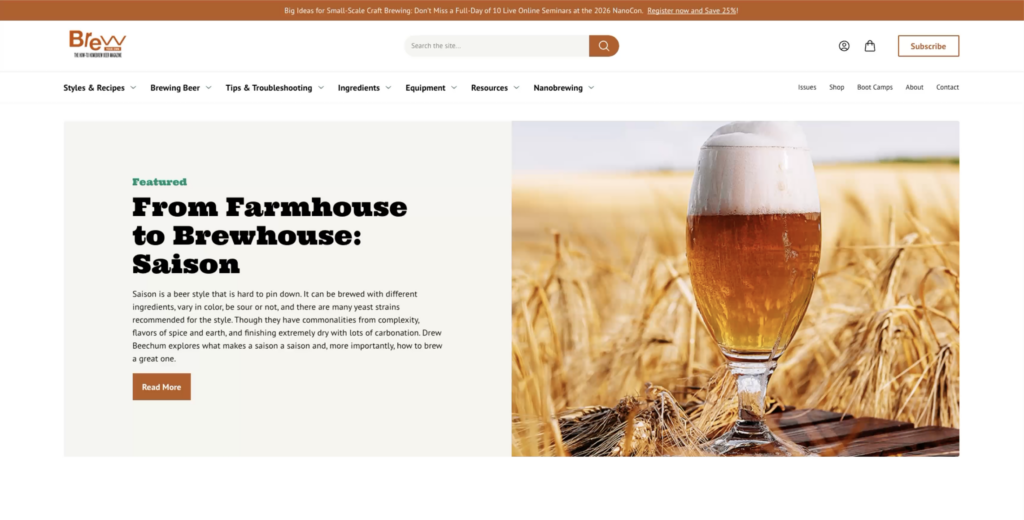
The publisher is Brew Your Own (BYO), a home brewing magazine in print since the 1990s. BYO has a deep library of evergreen content: recipes, brewing tips, troubleshooting guides. The kind of material that stays valuable for years. Print was still part of the mix when 50 Fish started working with them in 2023, and the plan at first was just to grow digital alongside it.
Then the publisher made the call. They were going digital-only, and the last print issue shipped in early 2025.
What Actually Happens to Your Subscribers
The honest answer: you lose some. The hardest group to move was the print-only legacy subscribers, including people who had prepaid for several years and were owed fulfillment. Some used the switch as their exit point. As Wally put it, plenty of folks decided they weren’t brewing anymore anyway, so this was as good a time as any to stop.
Wally’s rough math is that you might lose around a third of your subscribers in a transition like this. The question is whether losing that third is worth shedding the cost and complexity of producing print. For BYO, the writing was on the wall. Print wasn’t going to keep the ship floating forever.
The thing that made the loss manageable was planning. They spent about a year on it, working through the details: when to stop blowing in renewal cards, when to update the wrappers on the final print issues, where to point readers next. Special renewal pages, QR codes printed in the magazine, postcards. All of it laid out so readers had somewhere to land.
How They Kept Advertisers in the Fold
Subscriber revenue is one side. Every issue is also partly paid for by advertisers, and that’s a big thing to let go of.
BYO’s answer was a print replica in digital format. Log in and you can read the issue as a flipbook, laid out like the magazine. About 20% of readers still prefer the flipbook over standard web articles, which is enough to keep producing it. It also keeps print advertisers in the mix.
The flipbook still sells full-page and half-page placements, plus rotating banners around the content. The difference now is that the ads carry live links, and 50 Fish tracks flipbook opens and clicks. Advertisers get real engagement data instead of a static page. A click inside a flipbook is a high-intent click. Someone opened the issue and is cooking through it.
Not every advertiser stayed, but a good portion did, and they’re getting real value for it.
Stop Replicating Print Layouts on the Web
This was the biggest part of the project. Print publishers tend to organize content the way they build a magazine: by department or content type. BYO’s old navigation had buckets like articles and videos. A video about what, though? That structure tells the reader nothing.
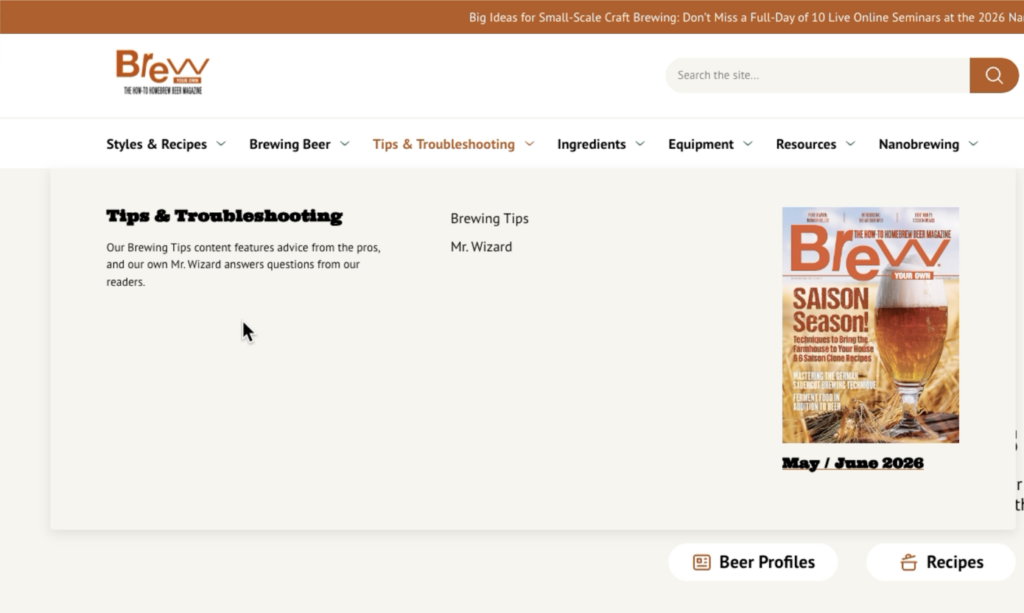
50 Fish ran a deep audit of the archive and re-architected the navigation around what people actually search for: styles and recipes, brewing tips and troubleshooting, ingredients, equipment, resources, nano brewing. Someone who wants to learn about kegging finds it under equipment, where they’d expect to look.
Topical structure turns an evergreen library into a real resource. It keeps readers on the site longer and it helps organic search. If you’re taking print away, the website has to be good enough to carry the business. The new site does a lot of the heavy lifting to keep people engaged and coming back, and traffic has ticked up since the launch.
The Lead-In Growth Hack
Some publishers have a couple of pieces of content that drive hundreds of thousands of views. The problem with a standard metered paywall is that one-and-done visitors read that one free article and bounce. You never capture them.
For those high-traffic magnets, 50 Fish uses Leaky Paywall’s Lead-In block. They give away about half the article, then drop a free registration wall right before a high-suspense subheading. The reader has built momentum on a long-form piece and wants to finish, so they hand over an email to keep reading.
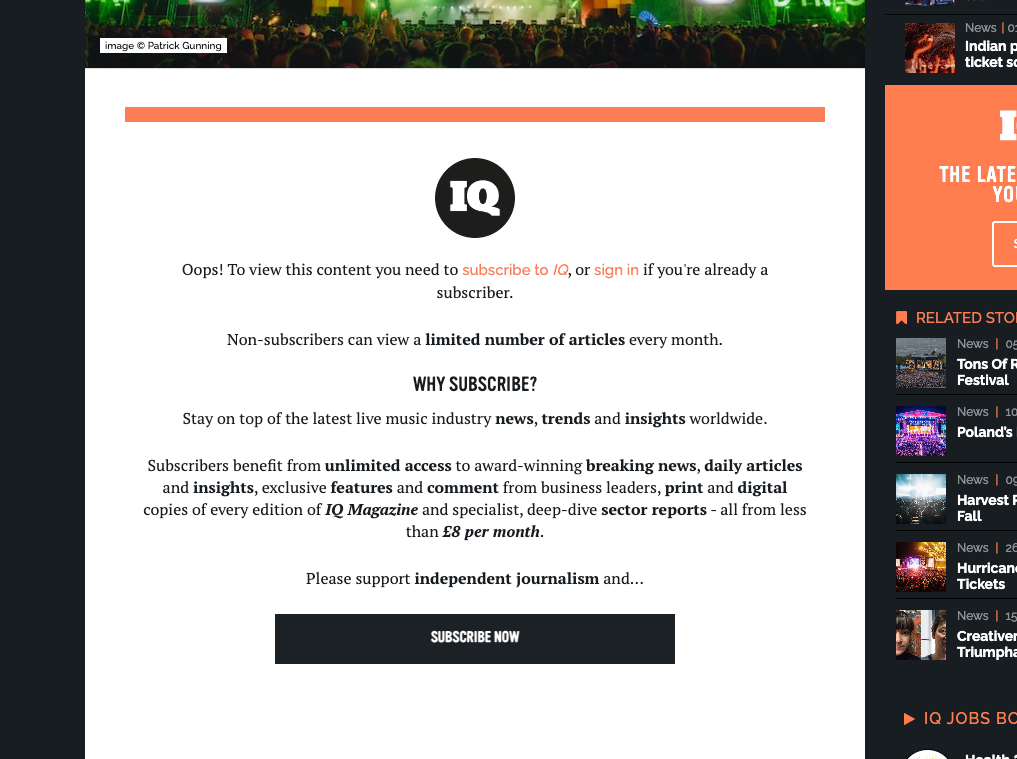
The content isn’t locked down hard. You give readers enough to build momentum on a long piece, then ask for the email when they’re most hooked.
Why Email Becomes the Product
Once you stop mailing physical magazines, your email list becomes the product. It’s how you reach your audience when a new article or video drops, and it’s a controlled channel nobody can take from you. No social algorithm decides who sees you.
On WineMaker, BYO’s sister publication, 50 Fish moved to Leaky Paywall’s List Builder and saw a bump in free registrations. The strategy from there is simple: tailor the messaging by subscriber level. For a free subscriber, the goal is to get them to the paywall as many times as possible. If they’re into the content, eventually they convert.
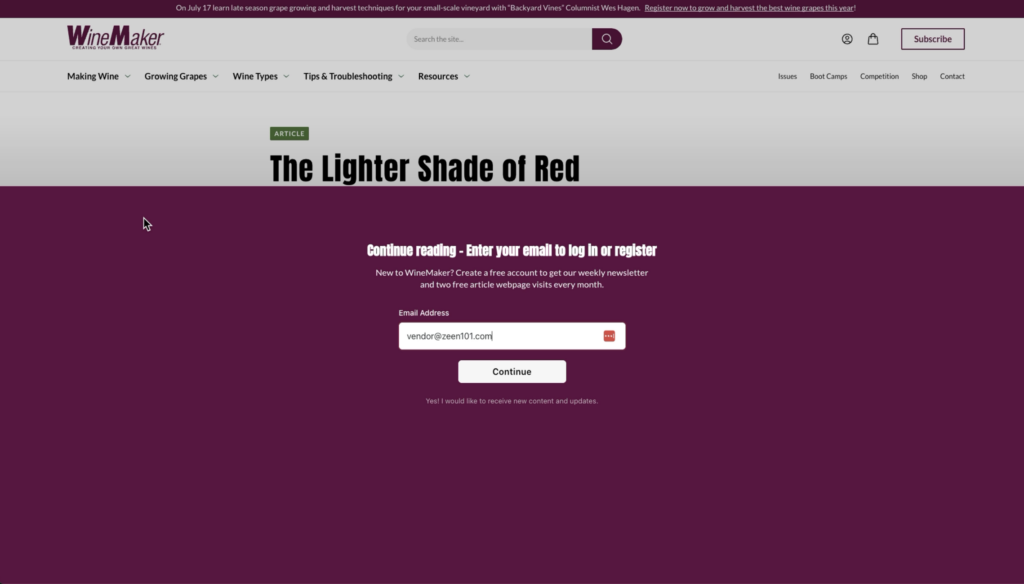
This lines up with what Pete is finding in a study he’s running on free registration across a range of publishers. Replacing pop-up and opt-in tools with a registration wall is showing a 2x to 7x bump in list building, depending on the industry. With AI eating into search referrals, owning the email channel matters more than ever.
Key Takeaways
- Plan for a year, not two months. BYO came in with a bulleted plan covering renewal cards, final-issue wrappers, and where to send readers next. The planning is what kept churn manageable.
- Build the replacement product before you pull print. Have the digital flipbooks, downloads, and infrastructure in place so you can show legacy readers exactly what they’re getting instead.
- Use a flipbook to retain print advertisers. A print-replica flipbook with trackable, clickable ads satisfies the readers who want a magazine layout and gives advertisers engagement data they never had on paper.
- Reorganize content by topic, not department. Topical buckets match how readers search, improve SEO, and lengthen sessions. Department-based navigation is a print habit that hurts you on the web.
- Reach further down the meter with Lead-In. On your highest-traffic organic articles, give away half the piece, then trigger a free registration wall at a suspenseful subhead to capture readers you’d otherwise lose.
If we’re taking away print, we need to make sure the website is a really valuable tool. So if we’re going to take something away, the site better be good enough to kind of support that business going forward.”
Wally Wallace, 50 Fish
Try This Week
Pull your top three organic-traffic articles. Add a Leaky Paywall Lead-In block to each one, give away the first half, and place a free registration wall right before a strong subheading. You’ll start converting the one-and-done search visitors you’ve been losing into email subscribers.
Watch the Episode
Resources Mentioned
