
Stop Losing Subscribers: A Flyer Magazine Teardown
A Subscription Optimizer teardown reveals five retention fixes for niche publishers: recurring billing, dynamic menus, newsletter segmentation, and smarter paywall messaging.

Episode Summary
- Recurring billing (even for annual plans) shifts retention focus from renewal campaigns to simple payment recovery
- Dynamic menus that swap “Subscribe” for “My Account” reduce confusion and support requests
- Free vs. paid newsletter differentiation creates tangible value subscribers feel in every email
- Leading with “Join for Free” instead of subscription options captures casual visitors before they disappear
The Playbook
Flyer Magazine is a UK-based aviation publication with a clean website, solid content, and clear calls to subscribe. They reached out asking about retention email best practices.
After reviewing the site, the conversation turned into a full Subscription Optimizer teardown covering retention, acquisition, and the connection between them. Here’s what every niche publisher can learn from the review.
1. Make Every Plan Recurring
This is the lowest-hanging fruit for any publisher struggling with retention.
If you offer annual subscriptions as one-time purchases, you’re creating unnecessary work. You end up sending streams of “please renew” emails and hoping subscribers take action. That’s a hard problem to solve.
When all plans are recurring, you shift your retention focus to two manageable issues: credit card expirations and active cancellation requests.
For payment failures, tools like Churn Buster handle the awkward “your card failed” conversation automatically. It follows up with subscribers to update their card details without you lifting a finger.
The result: annual subscribers renew automatically, and you only intervene when something actually breaks.
2. Use Dynamic Menus to Reduce Confusion
A dynamic menu changes the options visible to readers based on their subscription status. This sounds small, but it directly reduces support requests and improves the subscriber experience.
The most common example: swapping “Subscribe” for “My Account” once someone logs in.
The Business Journal uses this approach. Once a subscriber logs in, there’s no “Subscribe” button cluttering the menu. They see “My Account” instead, which is actually useful to them.
The Message, a Canadian marketing publication, takes this further by showing different account management options based on subscription type. A group subscriber sees “Renew Group Account” while individual subscribers see options relevant to them.
Less confusion means fewer support tickets and fewer frustrated readers clicking away. These small changes compound into meaningful retention improvements.
3. Differentiate Free and Paid Newsletters
If you’re sending the same newsletter to free and paid subscribers, you’re missing a retention opportunity.
The strategy works like this:
Free newsletter: Send excerpts of your content with clear upgrade messaging in every email. Target your free registered readers and drive them back to the website where they’ll hit conversion prompts.
Paid newsletter: No subscription messaging whatsoever. Instead, send full-text articles directly in the email. Paid subscribers get the convenience of reading everything without logging in or visiting the website.
This creates a tangible value difference subscribers feel every time they open their inbox.
With Leaky Paywall and an email service like Flowletter, you can use tag mirroring to automate this. When a credit card fails or someone cancels, their tag changes from “paid” to “canceled” and they automatically shift to the free newsletter stream with upgrade messaging.
4. Tighten Your Paywall (But Lead with Registration)
Flyer Magazine was letting readers consume five, six, seven articles without any prompt to register. That’s too generous.
The fix isn’t to immediately demand payment. Add a free registration requirement before the paid paywall kicks in.
When someone hits your free article limit, the message should lead with registration, not subscription options. Change “Become a Member” (which shows a confusing array of plans) to “Join for Free” (which leads to a simple registration form).
The benefits to promote at this stage:
- A few extra articles per month
- Your newsletter
Keep the language flexible. Say “a few extra articles” rather than “three free articles” so you can adjust settings on the backend without updating your copy.
Example:
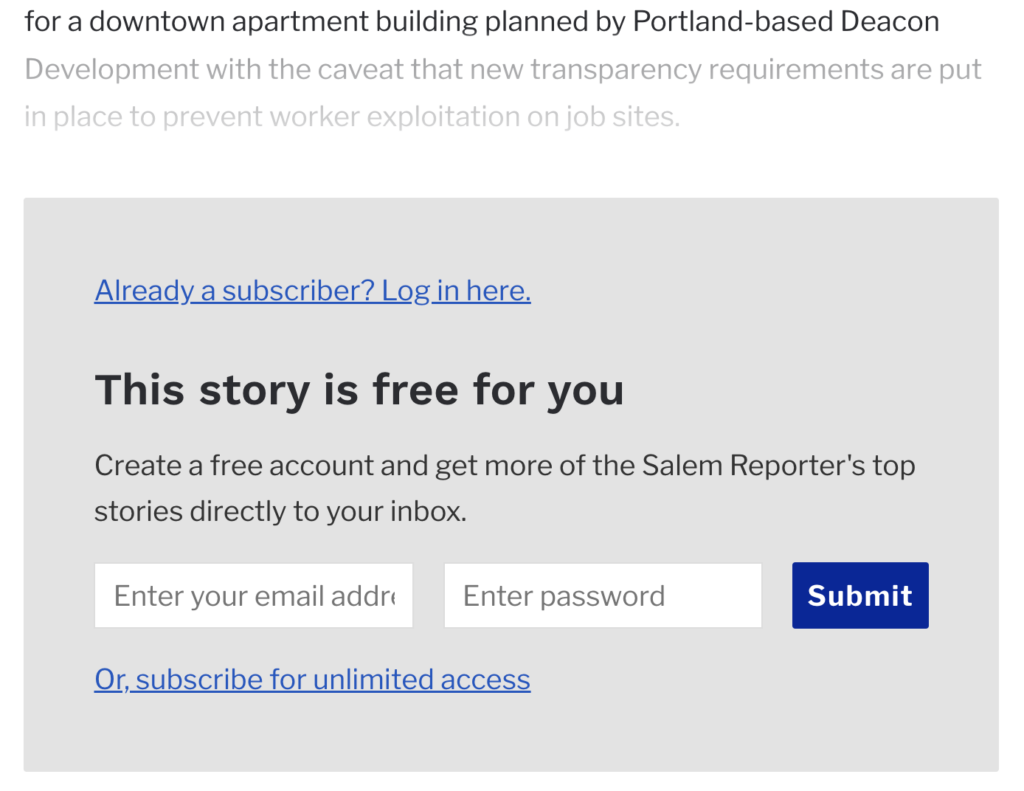
Once registered, readers enter your email nurture sequence. They visit the site, hit the paid paywall, and now you can present upgrade messaging to someone who’s already engaged.
This approach captures email addresses from casual visitors arriving via search or social. Without registration, those readers disappear forever. When publishers tighten their paywall this way, paid subscriptions typically increase because they’re building a larger base of engaged, registered readers who convert over time.
5. Remove Friction from Checkout
Here’s a checkout reality most publishers miss: when someone hits your paywall message and decides to subscribe, they’re often not logged in. That means they have to create an account, enter payment details, and complete checkout all in one sitting. That’s a lot of friction at the moment of decision.
Free registration solves this problem upstream. When readers register for free content access, they’re already in your system. They have a username and password. When they later decide to pay, checkout becomes a single step: enter payment details. No account creation, no friction at the critical moment. This is why the registration-first approach does double duty. It builds your email list for nurturing, and it pre-authenticates future paying subscribers. By the time someone is ready to pay, half the checkout process is already done.
Noteable quote
“What you want to do with the subscription funnel is really take folks directly to the free registration. The callout button would simply say ‘join for free’ and the benefits of signing up would be a few extra articles per month and the newsletter.”— Pete Ericson
Key Takeaways
- Recurring billing shifts the problem. Instead of chasing renewals, you’re just handling payment failures and cancellations.
- Registration before payment builds your funnel. Casual visitors become email subscribers become paying customers.
- Newsletter differentiation creates felt value. Paid subscribers should experience something meaningfully different in their inbox.
Try This Week
Check your subscription plans. If any are set as one-time purchases, switch them to recurring. Then set up Churn Buster or a similar payment recovery tool to handle failed cards automatically.
Bonus: Review your paywall message. Does the primary button lead to a “Join for Free” registration, or does it dump visitors into a confusing list of paid options?
Resources Mentioned
