
Why your 5-Article Content Meter Is Invisible
Learn why high meter counts make your paywall invisible and how the "one-and-one" framework accelerates email and revenue growth.

Episode Summary
- The average reader views only 1.7 articles per visit, so a 10-article meter means almost no one ever hits your paywall
- The “one-and-one” framework (1 free article, register for 1 more, then pay) works for most publishers and grows your list, traffic, and conversion rate simultaneously
- The New York Times went from 20 free articles to zero over a decade, and their subscription curve is now accelerating
- Magazine publishers who only gate long-form content while leaving blog posts open are missing most of their conversion opportunities
The Playbook
There are three phases of content restriction, and where your publication falls depends on the maturity of your brand, the size of your email list, and your confidence in your audience’s willingness to pay. Pete Ericson and Tyler Channel walk through each phase, with real publisher examples showing what works at every stage.
Phase 1: The Hard Paywall
The hard paywall is the most restrictive option: no access unless you pay. It boosts conversion rates by definition because readers have no choice. But it comes with real tradeoffs. Articles behind a hard wall don’t get shared on social media, and Google can’t index them by default. It does block paywall evasion services and AI crawlers from accessing your content, which is a growing concern for publishers.
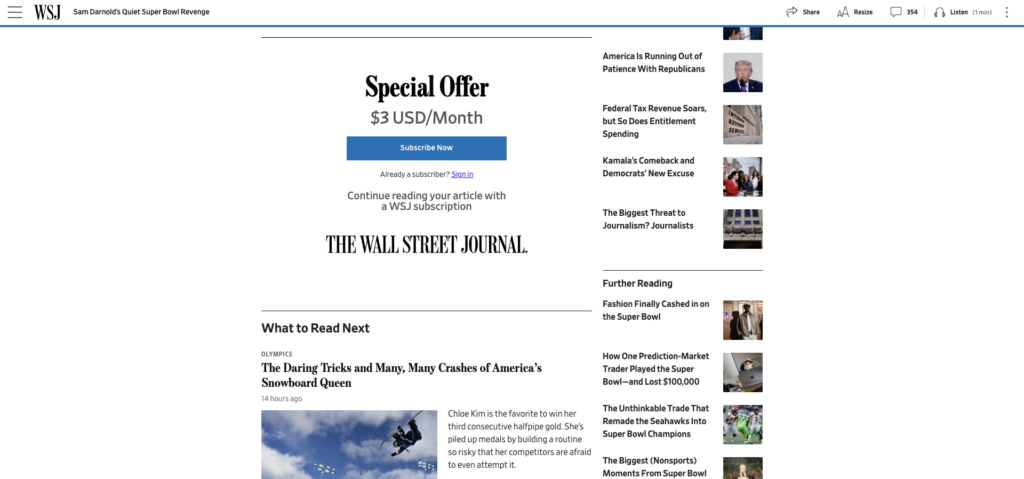
Hard paywalls work best for publishers with strong brand recognition and an established audience. The Wall Street Journal has always run a hard paywall. They know their audience can afford premium pricing, their content has clear financial value, and they don’t need to meter anything to build awareness.
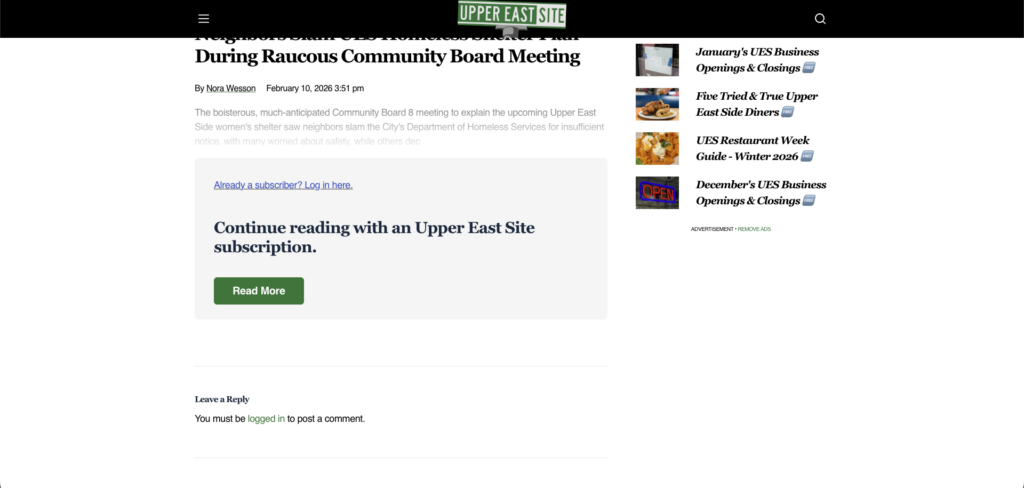
Upper East Site, a local news publisher covering a New York City neighborhood, also runs a hard paywall successfully. But they didn’t start there. They began with free registration, built their list over time, and only switched to a hard wall once they had brand recognition and audience confidence.
Phase 2: The Metered Paywall
This is the most popular approach for good reason. You allow a limited number of free articles per month, then require a subscription. Google indexes everything. Readers share your articles on social media and via email. You get the traffic and exposure benefits of open content while still converting engaged readers.
The critical detail most publishers get wrong is the meter setting. One real estate publisher allows 10 free articles per month. Given that the average reader views roughly 1.7 articles per visit, almost nobody hits that wall. Ten articles could take years to trigger a conversion prompt. That’s not generosity; it’s invisibility.
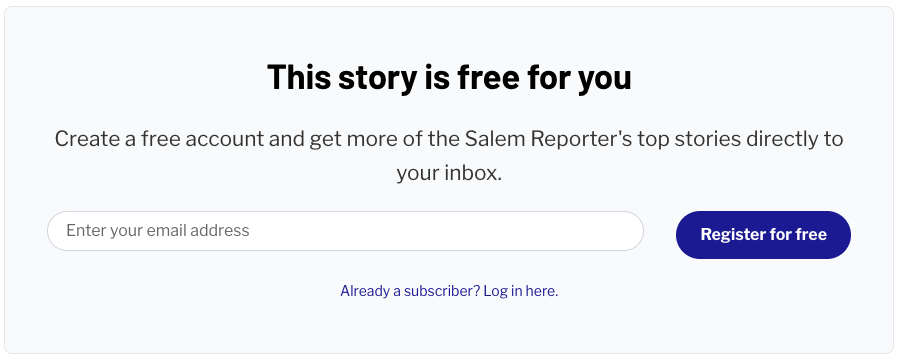
Compare that to Salem Reporter, which allows one free article per month. Your second article triggers a free registration wall. Register, and you get one more free article. Your third article requires payment. That “one-in-one” framework captures email addresses quickly and keeps upgrade messaging in front of readers consistently.
If you’re running a metered paywall, make sure you have incognito browsing protection enabled so readers can’t bypass the meter by opening a private window.
Phase 3: Free Registration Only
This phase is for publishers who are early in their journey and need to grow their email list fast. One business journal ran free registration only (register and get all content) for six months. They tripled their email list, then moved to a standard metered paywall. It works as a growth sprint, not a permanent strategy, because it’s harder to convert readers to paid later when they’ve been getting everything for free.
Why the One-and-One Framework Works
For most publishers somewhere in the middle of their subscription journey, the combination of metered paywall plus free registration does three things at once. It grows your email list because readers must provide an email to access more content. It builds traffic because as your newsletter list grows and you send regularly, you’re driving readers back to the site. And it naturally increases your paid conversion rate because those returning readers see upgrade messaging repeatedly.
The newsletter is the conversion engine. A reader who registers for free and starts receiving your newsletter might click into 10 or 20 articles over time. Each visit shows them a subscribe prompt. After enough exposure, the chances of pulling the trigger on payment go up significantly. That’s the power of the nurturing process.
What Magazine Publishers Get Wrong
Magazine publishers often gate their long-form magazine content while leaving blog posts open. This is a mistake. If you’re producing original content on your blog, it has value to the reader who found it through search or social media. They chose that article because it answers their question, regardless of format or length.
By leaving blog content open, you’re missing the chance to capture email addresses from a significant portion of your traffic. Your “please subscribe” messaging never appears for those visitors. Gate everything (with obvious exceptions like sponsored content), send the newsletter, and let the meter do the work of deciding when each reader sees a conversion prompt.
When to Go Hard
Not every publisher will reach the hard paywall stage, and that’s fine. But when your brand is strong enough, your email list is large and engaged, and you have confidence in your content’s value, locking things down can work. Financial publishers often go hard early because their content is timely and high-value, and their audience has money. Local news publishers can get there too, but it takes time to build that brand trust.
Upper East Site figured out through analytics that their audience cares most about two content categories: crime and food. They built their paywall strategy around what readers actually read, not what the editorial team assumed was most valuable. Analytics should guide your restriction strategy, not guesswork.
Key Takeaways
- Set your meter aggressively: At 1.7 articles per visit, anything above 2 free articles means most of your traffic never encounters a conversion prompt. One free article, then registration, then payment.
- Free registration is the bridge: It captures email addresses at 15-20% conversion rates. Those registered readers become your newsletter audience, which becomes your paid subscriber pipeline.
- Gate all original content: Don’t selectively gate only premium content. Every original article has value to the reader who searched for it. Use category exceptions only for sponsored content or public emergencies.
- Hard paywalls are earned, not chosen: You need a strong brand, a big email list, and audience confidence before locking everything behind payment. Upper East Site and the Wall Street Journal didn’t start with hard walls (Upper East Site used free registration first).
Noteable Quote
“Instead of giving away ten free articles a month and hoping and praying, you sort of set it as restricted. It’s one free article, then you register, and you can give a couple a month if you want. There’s levers here.”Pete Ericson
Try This Week
Check your current meter setting. If it’s above 2 free articles, drop it to 1 free article with free registration on the second. Compare your registration numbers over the next 30 days to see the difference in email capture.
Watch the Episode
Listen to the Paywall Podcast
Resources Mentioned
